
The family guide / 2026–27
Competition
climbing,
explained.
Understand age categories, competition levels, rules and the steps from local events to national competition.
Find your pathway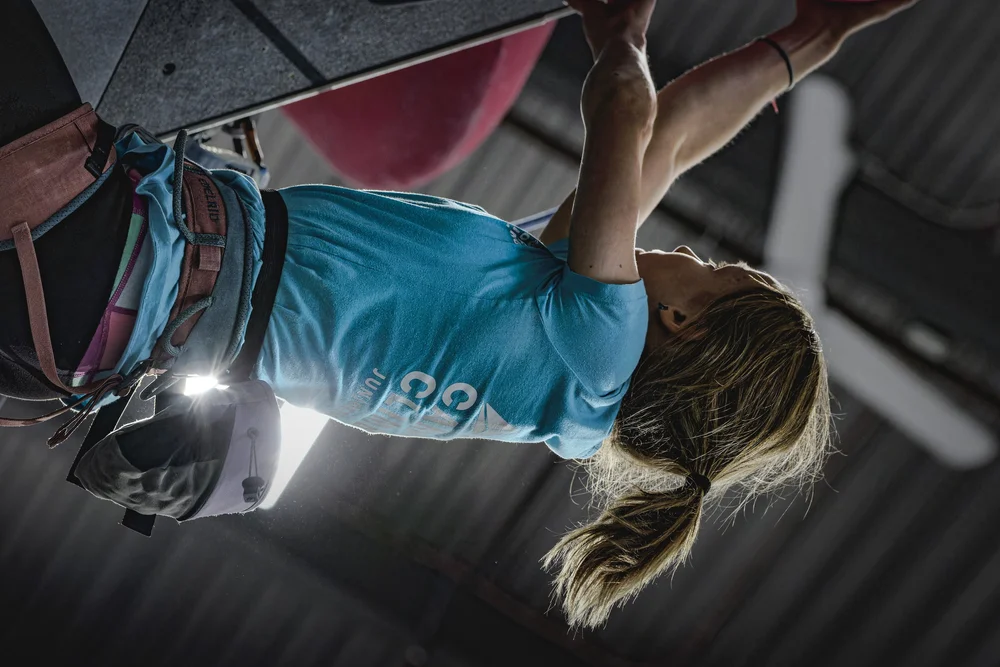
Heather Chapin Photography · 2024 Top Rope Provincials
First, decode the event name
How to read an event listing.
- Age category
- U17Who you compete with.
- Tier
- Tier 2Your boulder group, where applicable.
- Discipline
- BoulderThe kind of climbing.
- Event level
- LocalWhere it fits in the season.
01 / Competition pathways
Your season.
Your pathway.
Choose an age category and a discipline. The route changes with both. Each stage has its own eligibility and qualification requirements.
U17 · Boulder
The youth boulder route goes through Regionals.
ACA · placement
Establish your tier
Check your ACA assignment. Seeding places eligible U17 and U19 boulder athletes into the tiered season.
Alberta
Enter local events
Build competition experience. Choose the correct age category and assigned boulder tier.
ACA
Provincial championship
Follow the season’s qualification policy and invitation process. Track standings for this discipline.
ACA → CEC
Youth Boulder Regionals
ACA nominates eligible athletes within its allocated quota. For Alberta, the regional event is West.
CEC
Youth Boulder Nationals
Progression from Regionals depends on CEC’s published selection rules and a confirmed invitation.
Each step has its own entry requirements. A local result or a Tier 1 place does not, by itself, secure a national invitation.
Check the 2027 regional event information for quotas and entry requirements. Ask ACA how the new tiers feed provincial qualification and national nominations.
Season details & sources
These pathways follow the 2025–26 national event structure. Check the 2027 event information before accepting invitations or booking travel.
CEC age categories · 2026–27 ↗ · CEC qualification process ↗ · ACA boulder tier policy · 2026–27 (PDF) ↗ · CEC youth boulder structure · 2025–26 reference ↗ · CEC youth nationals · 2025–26 reference ↗
U13 · Boulder
Build experience. Enjoy the provincial season.
Alberta
Enter local events
Build competition experience. Choose the correct age category.
ACA
Provincial championship
Follow the season’s qualification policy and invitation process. Track standings for this discipline.
There is no CEC national championship step for this age category in the published structure. Keep developing with your gym and coach.
CEC lists no regional or national championships for U13. U15 has a youth boulder regional opportunity, but no national championship.
Season details & sources
These pathways follow the 2025–26 national event structure. Check the 2027 event information before accepting invitations or booking travel.
CEC age categories · 2026–27 ↗ · CEC qualification process ↗
U13 · Ropes / lead
Build experience. Enjoy the provincial season.
Alberta
Enter local events
Build competition experience. Choose the correct age category. Younger ropes events may use top rope; read the event format.
ACA
Provincial championship
Follow the season’s qualification policy and invitation process. Track standings for this discipline.
There is no CEC national championship step for this age category in the published structure. Keep developing with your gym and coach.
CEC lists no regional or national championships for U13. U15 has a youth boulder regional opportunity, but no national championship.
Season details & sources
These pathways follow the 2025–26 national event structure. Check the 2027 event information before accepting invitations or booking travel.
CEC age categories · 2026–27 ↗ · CEC qualification process ↗
U13 · Speed
Build experience. Enjoy the provincial season.
Alberta
Train & race locally
Look for speed training and ACA events offering your category. Speed has its own entries and results.
ACA
Speed Provincials
Check the Speed Provincials listing, category availability and selection instructions with ACA.
There is no CEC national championship step for this age category in the published structure. Keep developing with your gym and coach.
For younger speed athletes, confirm which local categories and wall format are offered. The last Speed Nationals listed U17, U19, U21 and Senior.
Season details & sources
These pathways follow the 2025–26 national event structure. Check the 2027 event information before accepting invitations or booking travel.
CEC age categories · 2026–27 ↗ · CEC qualification process ↗ · CEC speed nationals · 2025–26 reference ↗
U15 · Boulder
The youth boulder route goes through Regionals.
Alberta
Enter local events
Build competition experience. Choose the correct age category.
ACA
Provincial championship
Follow the season’s qualification policy and invitation process. Track standings for this discipline.
ACA → CEC
Youth Boulder Regionals
ACA nominates eligible athletes within its allocated quota. For Alberta, the regional event is West.
U15 reaches the regional level in this pathway. CEC does not list a U15 national championship.
Check the 2027 regional event information for quotas and entry requirements.
Season details & sources
These pathways follow the 2025–26 national event structure. Check the 2027 event information before accepting invitations or booking travel.
CEC age categories · 2026–27 ↗ · CEC qualification process ↗ · CEC youth boulder structure · 2025–26 reference ↗
U15 · Ropes / lead
Build experience. Enjoy the provincial season.
Alberta
Enter local events
Build competition experience. Choose the correct age category. Younger ropes events may use top rope; read the event format.
ACA
Provincial championship
Follow the season’s qualification policy and invitation process. Track standings for this discipline.
There is no CEC national championship step for this age category in the published structure. Keep developing with your gym and coach.
CEC lists no regional or national championships for U13. U15 has a youth boulder regional opportunity, but no national championship.
Season details & sources
These pathways follow the 2025–26 national event structure. Check the 2027 event information before accepting invitations or booking travel.
CEC age categories · 2026–27 ↗ · CEC qualification process ↗
U15 · Speed
Build experience. Enjoy the provincial season.
Alberta
Train & race locally
Look for speed training and ACA events offering your category. Speed has its own entries and results.
ACA
Speed Provincials
Check the Speed Provincials listing, category availability and selection instructions with ACA.
There is no CEC national championship step for this age category in the published structure. Keep developing with your gym and coach.
For younger speed athletes, confirm which local categories and wall format are offered. The last Speed Nationals listed U17, U19, U21 and Senior.
Season details & sources
These pathways follow the 2025–26 national event structure. Check the 2027 event information before accepting invitations or booking travel.
CEC age categories · 2026–27 ↗ · CEC qualification process ↗ · CEC speed nationals · 2025–26 reference ↗
U17 · Boulder
The youth boulder route goes through Regionals.
ACA · placement
Establish your tier
Check your ACA assignment. Seeding places eligible U17 and U19 boulder athletes into the tiered season.
Alberta
Enter local events
Build competition experience. Choose the correct age category and assigned boulder tier.
ACA
Provincial championship
Follow the season’s qualification policy and invitation process. Track standings for this discipline.
ACA → CEC
Youth Boulder Regionals
ACA nominates eligible athletes within its allocated quota. For Alberta, the regional event is West.
CEC
Youth Boulder Nationals
Progression from Regionals depends on CEC’s published selection rules and a confirmed invitation.
Each step has its own entry requirements. A local result or a Tier 1 place does not, by itself, secure a national invitation.
Check the 2027 regional event information for quotas and entry requirements. Ask ACA how the new tiers feed provincial qualification and national nominations.
Season details & sources
These pathways follow the 2025–26 national event structure. Check the 2027 event information before accepting invitations or booking travel.
CEC age categories · 2026–27 ↗ · CEC qualification process ↗ · ACA boulder tier policy · 2026–27 (PDF) ↗ · CEC youth boulder structure · 2025–26 reference ↗ · CEC youth nationals · 2025–26 reference ↗
U17 · Ropes / lead
Qualify for Nationals through your discipline’s entry process.
Alberta
Enter local events
Build competition experience. Choose the correct age category.
ACA
Provincial championship
Follow the season’s qualification policy and invitation process. Track standings for this discipline.
ACA → CEC
Nomination & invitation
ACA selects eligible athletes within CEC’s quota. CEC also has separate prequalification and application routes.
CEC
Youth Lead Nationals
Accept the offer, meet the licence requirements and complete event registration by the stated deadline.
Qualification is specific to the discipline and category. Qualifying in one does not automatically enter you in another.
The 2026–27 calendar is published. Confirm 2027 quotas and entry conditions with ACA and the event information when available.
Season details & sources
These pathways follow the 2025–26 national event structure. Check the 2027 event information before accepting invitations or booking travel.
CEC age categories · 2026–27 ↗ · CEC qualification process ↗ · CEC youth nationals · 2025–26 reference ↗
U17 · Speed
Qualify for Nationals through your discipline’s entry process.
Alberta
Train & race locally
Look for speed training and ACA events offering your category. Speed has its own entries and results.
ACA
Speed Provincials
Check the Speed Provincials listing, category availability and selection instructions with ACA.
ACA → CEC
Nomination & invitation
ACA selects eligible athletes within CEC’s quota. CEC also has separate prequalification and application routes.
CEC
Youth Speed Nationals
Accept the offer, meet the licence requirements and complete event registration by the stated deadline.
Qualification is specific to the discipline and category. Qualifying in one does not automatically enter you in another.
The 2026–27 calendar is published. Confirm 2027 quotas and entry conditions with ACA and the event information when available.
Season details & sources
These pathways follow the 2025–26 national event structure. Check the 2027 event information before accepting invitations or booking travel.
CEC age categories · 2026–27 ↗ · CEC qualification process ↗ · CEC speed nationals · 2025–26 reference ↗
U19 · Boulder
The youth boulder route goes through Regionals.
ACA · placement
Establish your tier
Check your ACA assignment. Seeding places eligible U17 and U19 boulder athletes into the tiered season.
Alberta
Enter local events
Build competition experience. Choose the correct age category and assigned boulder tier.
ACA
Provincial championship
Follow the season’s qualification policy and invitation process. Track standings for this discipline.
ACA → CEC
Youth Boulder Regionals
ACA nominates eligible athletes within its allocated quota. For Alberta, the regional event is West.
CEC
Youth Boulder Nationals
Progression from Regionals depends on CEC’s published selection rules and a confirmed invitation.
Each step has its own entry requirements. A local result or a Tier 1 place does not, by itself, secure a national invitation.
Check the 2027 regional event information for quotas and entry requirements. Ask ACA how the new tiers feed provincial qualification and national nominations.
Season details & sources
These pathways follow the 2025–26 national event structure. Check the 2027 event information before accepting invitations or booking travel.
CEC age categories · 2026–27 ↗ · CEC qualification process ↗ · ACA boulder tier policy · 2026–27 (PDF) ↗ · CEC youth boulder structure · 2025–26 reference ↗ · CEC youth nationals · 2025–26 reference ↗
U19 · Ropes / lead
Qualify for Nationals through your discipline’s entry process.
Alberta
Enter local events
Build competition experience. Choose the correct age category.
ACA
Provincial championship
Follow the season’s qualification policy and invitation process. Track standings for this discipline.
ACA → CEC
Nomination & invitation
ACA selects eligible athletes within CEC’s quota. CEC also has separate prequalification and application routes.
CEC
Youth Lead Nationals
Accept the offer, meet the licence requirements and complete event registration by the stated deadline.
Qualification is specific to the discipline and category. Qualifying in one does not automatically enter you in another.
The 2026–27 calendar is published. Confirm 2027 quotas and entry conditions with ACA and the event information when available.
Season details & sources
These pathways follow the 2025–26 national event structure. Check the 2027 event information before accepting invitations or booking travel.
CEC age categories · 2026–27 ↗ · CEC qualification process ↗ · CEC youth nationals · 2025–26 reference ↗
U19 · Speed
Qualify for Nationals through your discipline’s entry process.
Alberta
Train & race locally
Look for speed training and ACA events offering your category. Speed has its own entries and results.
ACA
Speed Provincials
Check the Speed Provincials listing, category availability and selection instructions with ACA.
ACA → CEC
Nomination & invitation
ACA selects eligible athletes within CEC’s quota. CEC also has separate prequalification and application routes.
CEC
Youth Speed Nationals
Accept the offer, meet the licence requirements and complete event registration by the stated deadline.
Qualification is specific to the discipline and category. Qualifying in one does not automatically enter you in another.
The 2026–27 calendar is published. Confirm 2027 quotas and entry conditions with ACA and the event information when available.
Season details & sources
These pathways follow the 2025–26 national event structure. Check the 2027 event information before accepting invitations or booking travel.
CEC age categories · 2026–27 ↗ · CEC qualification process ↗ · CEC speed nationals · 2025–26 reference ↗
U21 · Boulder
Qualify for Nationals through your discipline’s entry process.
Alberta
Enter local events
Build competition experience. Choose the correct age category.
ACA
Provincial championship
Follow the season’s qualification policy and invitation process. Track standings for this discipline.
ACA → CEC
Nomination & invitation
ACA selects eligible athletes within CEC’s quota. CEC also has separate prequalification and application routes.
CEC
Youth Boulder Nationals
Accept the offer, meet the licence requirements and complete event registration by the stated deadline.
Qualification is specific to the discipline and category. Qualifying in one does not automatically enter you in another.
The 2026–27 calendar is published. Confirm 2027 quotas and entry conditions with ACA and the event information when available.
Season details & sources
These pathways follow the 2025–26 national event structure. Check the 2027 event information before accepting invitations or booking travel.
CEC age categories · 2026–27 ↗ · CEC qualification process ↗ · CEC youth nationals · 2025–26 reference ↗
U21 · Ropes / lead
Qualify for Nationals through your discipline’s entry process.
Alberta
Enter local events
Build competition experience. Choose the correct age category.
ACA
Provincial championship
Follow the season’s qualification policy and invitation process. Track standings for this discipline.
ACA → CEC
Nomination & invitation
ACA selects eligible athletes within CEC’s quota. CEC also has separate prequalification and application routes.
CEC
Youth Lead Nationals
Accept the offer, meet the licence requirements and complete event registration by the stated deadline.
Qualification is specific to the discipline and category. Qualifying in one does not automatically enter you in another.
The 2026–27 calendar is published. Confirm 2027 quotas and entry conditions with ACA and the event information when available.
Season details & sources
These pathways follow the 2025–26 national event structure. Check the 2027 event information before accepting invitations or booking travel.
CEC age categories · 2026–27 ↗ · CEC qualification process ↗ · CEC youth nationals · 2025–26 reference ↗
U21 · Speed
Qualify for Nationals through your discipline’s entry process.
Alberta
Train & race locally
Look for speed training and ACA events offering your category. Speed has its own entries and results.
ACA
Speed Provincials
Check the Speed Provincials listing, category availability and selection instructions with ACA.
ACA → CEC
Nomination & invitation
ACA selects eligible athletes within CEC’s quota. CEC also has separate prequalification and application routes.
CEC
Youth Speed Nationals
Accept the offer, meet the licence requirements and complete event registration by the stated deadline.
Qualification is specific to the discipline and category. Qualifying in one does not automatically enter you in another.
The 2026–27 calendar is published. Confirm 2027 quotas and entry conditions with ACA and the event information when available.
Season details & sources
These pathways follow the 2025–26 national event structure. Check the 2027 event information before accepting invitations or booking travel.
CEC age categories · 2026–27 ↗ · CEC qualification process ↗ · CEC speed nationals · 2025–26 reference ↗
Senior · Boulder
Qualify for Nationals through your discipline’s entry process.
Alberta
Enter local events
Build competition experience. Choose the correct age category.
ACA
Provincial championship
Follow the season’s qualification policy and invitation process. Track standings for this discipline.
ACA → CEC
Nomination & invitation
ACA selects eligible athletes within CEC’s quota. CEC also has separate prequalification and application routes.
CEC
Senior Boulder Nationals
Accept the offer, meet the licence requirements and complete event registration by the stated deadline.
Qualification is specific to the discipline and category. Qualifying in one does not automatically enter you in another.
The 2026–27 calendar is published. Confirm 2027 quotas and entry conditions with ACA and the event information when available.
Season details & sources
These pathways follow the 2025–26 national event structure. Check the 2027 event information before accepting invitations or booking travel.
CEC age categories · 2026–27 ↗ · CEC qualification process ↗
Senior · Ropes / lead
Qualify for Nationals through your discipline’s entry process.
Alberta
Enter local events
Build competition experience. Choose the correct age category.
ACA
Provincial championship
Follow the season’s qualification policy and invitation process. Track standings for this discipline.
ACA → CEC
Nomination & invitation
ACA selects eligible athletes within CEC’s quota. CEC also has separate prequalification and application routes.
CEC
Senior Lead Nationals
Accept the offer, meet the licence requirements and complete event registration by the stated deadline.
Qualification is specific to the discipline and category. Qualifying in one does not automatically enter you in another.
The 2026–27 calendar is published. Confirm 2027 quotas and entry conditions with ACA and the event information when available.
Season details & sources
These pathways follow the 2025–26 national event structure. Check the 2027 event information before accepting invitations or booking travel.
CEC age categories · 2026–27 ↗ · CEC qualification process ↗
Senior · Speed
Qualify for Nationals through your discipline’s entry process.
Alberta
Train & race locally
Look for speed training and ACA events offering your category. Speed has its own entries and results.
ACA
Speed Provincials
Check the Speed Provincials listing, category availability and selection instructions with ACA.
ACA → CEC
Nomination & invitation
ACA selects eligible athletes within CEC’s quota. CEC also has separate prequalification and application routes.
CEC
Senior Speed Nationals
Accept the offer, meet the licence requirements and complete event registration by the stated deadline.
Qualification is specific to the discipline and category. Qualifying in one does not automatically enter you in another.
The 2026–27 calendar is published. Confirm 2027 quotas and entry conditions with ACA and the event information when available.
Season details & sources
These pathways follow the 2025–26 national event structure. Check the 2027 event information before accepting invitations or booking travel.
CEC age categories · 2026–27 ↗ · CEC qualification process ↗ · CEC speed nationals · 2025–26 reference ↗
The age table and boulder tiers below apply to 2026–27. The national pathways use the 2025–26 event structure; check the 2027 event information for updated quotas and entry requirements.
Just starting? A great first season can be a few local events. Talk to your gym or coach, arrange ACA membership, then choose an event together. You can build confidence at your own pace.
02 / Find your group
Age sets the category.
Tier sets the group.
Use the season’s birth-year table. Your age on competition day can differ from the age used to place you in a category.
| Category | Birth years | Age on 31 Dec 2027 |
|---|---|---|
| U13Youth D | 2015–2016 | 11–12 |
| U15Youth C | 2013–2014 | 13–14 |
| U17Youth B | 2011–2012 | 15–16 |
| U19Youth A | 2009–2010 | 17–18 |
| U21Junior / Jr | 2007–2008 | 19–20 |
| SeniorSr | 2010 or earlier | 17+ |
Source: CEC categories for 2026–27 ↗. Senior overlaps U19 and U21. See entry guidance below.
Senior entry & younger climbers
Senior overlaps the youth categories. CEC’s 17+ eligibility includes U19 and U21 ages. Each entry still has its own qualification requirements.
If you compete in a youth category and want to enter Senior events, ask ACA which membership and event entry you need. For athletes younger than 11, contact ACA about the available competition options.
U17 / U19 boulder seeding24 October 2026 · Factory Climbing
Event details03 / Understand the next step
Local. Provincial.
Regional. National.
ACA organizes Alberta’s provincial pathway. Climbing Escalade Canada (CEC) is the national governing body, responsible for its regional and national championship series.
01 / Alberta
Locals
Season events hosted at climbing gyms. These give athletes competition experience and, where the policy provides, results used in provincial standings.
Explore the ACA calendar →02 / Alberta
Provincials
A provincial championship in a discipline. Entry can depend on qualifying results and an invitation. One event’s finish and your season ranking are different things.
Understand the standings →03 / CEC West
Regionals
The published youth boulder structure includes U15, U17 and U19. Alberta athletes attend West through the nomination process. This stage is specific to that pathway.
U15 competes up to Regionals in this pathway. Eligible U17/U19 athletes can continue to Nationals.
04 / Canada
Nationals
CEC’s national championships. Youth nationals include U17, U19 and U21; Senior is a separate category. Category, discipline and qualification all matter.
View CEC’s season calendar ↗The invitation process
How do we get a place?
- Earn results. ACA applies the season’s eligibility and ranking policies for your discipline.
- Receive an offer. CEC allocates quotas; ACA nominates athletes into those places. CEC has additional prequalification and application routes.
- Accept and register. Respond on time, arrange the required licence and team items, and complete the event entry.
Two teams, different selections
Team Alberta → Team Canada
Team Alberta is the provincial team for the relevant CEC events. Receiving a provincial team place brings specific acceptance, entry and team requirements.
Team Canada is selected through CEC’s national-team policies for international competition. A provincial place or a trip to Nationals does not automatically put an athlete on the national team.
Canada Winter Games has its own age and selection rules. Treat it as a separate programme.
Explore the Canada Games pathway →The bigger picture
Beyond Nationals.
National championships, national-team selection and Olympic qualification are separate milestones. Each has its own entry and selection requirements.
Youth development
Youth Worlds
CEC’s youth programme links national performances to further selection and training opportunities. Its published 2026 Youth Worlds pathway is for U17 and U19; the year’s selection policy controls who receives an offer.
A second use of “tier”: CEC describes youth programme Tiers 1, 2 and 3. These are separate from ACA’s Tier 1 / Tier 2 boulder groups.
CEC youth programme ↗International competition
Representing Canada
CEC’s National Team Programme has Development, Performance and Elite squads. Selection for World Climbing events considers squad priority, age eligibility, rankings and available places.
The Continuous National Ranking (CNR) combines specified results over time. It is different from ACA season standings and one Nationals finish. Major Games can have their own nomination procedures.
CEC policy · July 2026 (PDF) ↗Los Angeles 2028
The Olympic stage
LA28 has separate Boulder, Lead and Speed events for women and men. The combined format seen in earlier Olympics has changed.
For Canadian athletes, qualification opportunities include the 2027 Pan American Games, 2027 World Championships and 2028 Olympic Q-Series. Entry to those competitions and final Olympic participation each have requirements.
World Climbing’s LA28 overview ↗Olympic eligibility, quotas & official qualification documents
The IOC-hosted systems dated 22 July 2026 set a maximum of two athletes per country, per gender, per discipline. Athletes must have been born before 1 January 2012 and meet the other participation requirements, including an international licence.
Qualifying places are allocated to named athletes and require National Olympic Committee confirmation. Boulder/Lead cross-qualification and unused-place reallocations have additional rules. Invitations to the Q-Series depend on international results/rankings and its separate entry criteria.
Read the current CEC nomination procedure alongside the LA28 qualification documents. Qualification results, licence requirements and Canadian nomination all affect entry.
IOC qualification PDFs, 22 July 2026: Boulder ↗ · Lead ↗ · Speed ↗.
What about qualifying cutoffs, missed events or moving provinces?
Provincial qualification depends on the season’s ranking and eligibility rules. Confirm the 2026–27 requirements with ACA before relying on a cutoff from an earlier season.
Ask ACA which results count, how tiers feed Provincials, how ties are resolved and when invitations arrive. Injury, relocation, residence outside Alberta and foreign-national participation may require a separate review under the eligibility policy.
The ranking policy is labelled 2025–26; the 2026–27 tier policy keeps earlier policies in effect until they are replaced. Find the published policy documents →
04 / Follow the action
How scoring
works.
A parent’s guide to watching and reading results. The event information and officials’ briefing tell you the exact format, time limits and scoring system.
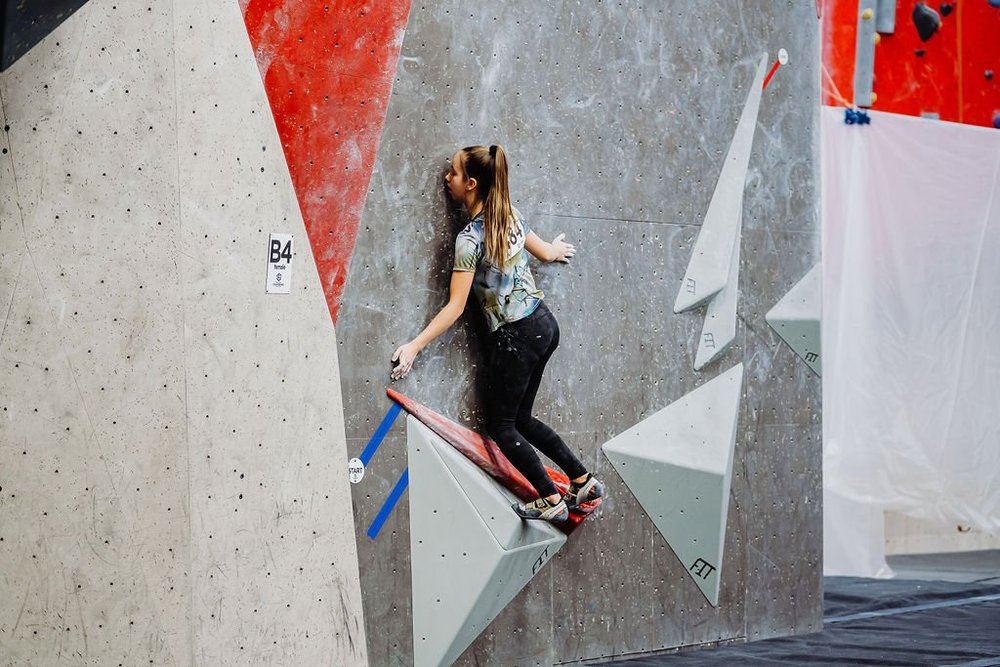
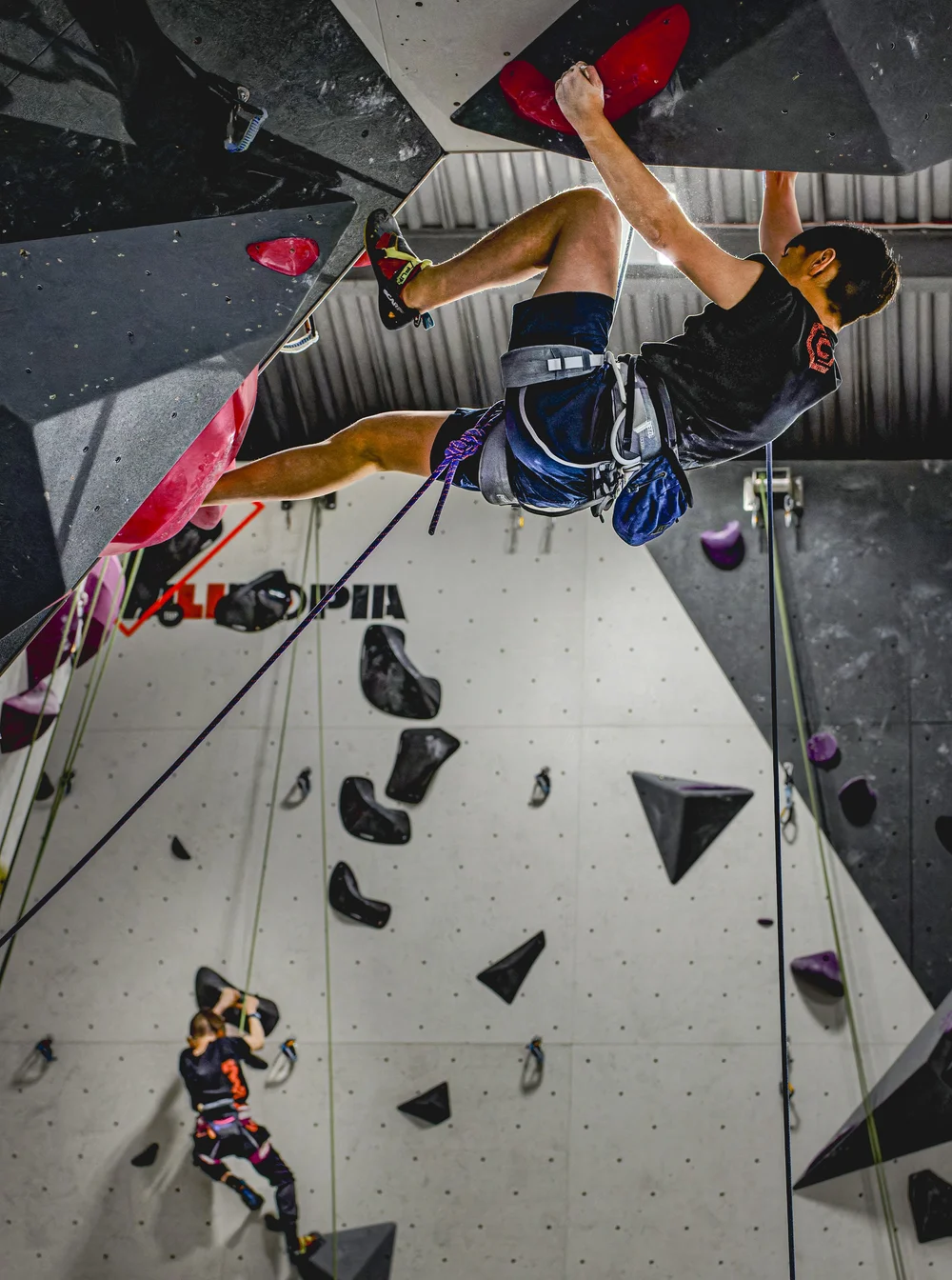
Heather Chapin Photography · 2024 Top Rope Provincials
BoulderProblems, attempts, zones & tops
Short climbs over mats. Athletes may try again within the allowed format and time. A valid start uses the marked starting positions; a top requires controlled completion as judged under the rules.
- Top
- Completing the problem. A marked finish hold must be controlled with both hands; simply touching it is not enough.
- Zone
- A designated scoring hold showing progress before the top.
- Attempts
- Retries matter in scoring or tie-breaks. The event’s format explains how.
Watch for: the judge’s signal, controlled positions and the clock. Scoreboards can use points or top/zone/attempt notation; read the event’s scoring key before comparing totals.
Ropes / leadHeight, control & progress
Athletes climb a longer route with a rope. In lead they clip protection as they climb; in top rope the rope is already above them. Younger ACA ropes events may use top rope.
- Hold score
- The furthest scored progress on the route. A “+” indicates further progress under the scoring rules.
- Top
- Completing the route under its rules, including the finish clip in lead.
- Ties
- Previous-round performance and other rule-based tie-breaks may apply. Height alone does not explain every final rank.
Watch for: controlled progress and the finish. A gym grade such as 5.11 is a route’s difficulty, not the athlete’s competition score.
SpeedValid times & head-to-head races
A timed climb on a standardized route. Qualifying runs establish a ranking; elimination rounds, where used, put athletes head to head.
- Valid time
- A completed, valid run recorded by the timing system.
- False start / fall
- These are handled by the event rules, rather than treated as ordinary slower times.
- PB
- Personal best. A great milestone even when it does not produce a podium.
Watch for: the start signal and finish timer. The youngest age groups can use a different wall format, so check category availability and event details.
Rule references: CEC rules and Canadian amendments ↗ · World Climbing / IFSC rules linked by CEC (PDF) ↗. The CEC page currently links 2025–26 amendments; use the edition named by your event.
A few words you’ll hear
- Flash format
- Prior route information or a demonstration is available under the event rules.
- On-sight & isolation
- Access to route information and other attempts is restricted. Follow officials’ instructions about entry, devices and communication.
- Beta
- Advice about how to climb a route. Whether you may share it depends on the format.
- Qualification round
- The opening round of one event. Different from qualifying for a later championship.
- Season ranking
- Standings built from the specified counting events. Different from one competition’s result.
- Quota
- The number of places allocated to a province, category or qualification route.
05 / Getting ready
A checklist
for parents.
What to check before the season, before each event and when an invitation arrives.
Get the basics right.
- Confirm age category and any boulder tier with your coach or ACA.
- Arrange the correct ACA membership and waiver.
- Register separately for each event; save the receipt and deadline.
- Check the parent and athlete contact details used for event messages.
Plan competition day.
- Check the latest schedule, venue waiver, parking and equipment requirements.
- Note check-in, isolation closing time and start time separately.
- Ask about spectators, coach access, food breaks and accessibility needs.
- Read updates again before travelling.
Accept. Then enter.
- Reply to the invitation by its deadline.
- Confirm the required CEC licence, event fee and ACA team requirements.
- Complete the actual registration; an invitation alone is not an entry.
- Confirm event dates and acceptance before finalizing travel.

Your role on the team
Support your
climber.
Agree on what support your climber wants. Help with logistics, respect the competition area and let the officials handle scoring. Celebrate learning, effort and the next attempt.
Parents are not automatically accredited coaches. If a score seems wrong, speak promptly with the coach or event officials about the proper review process.
Get involved through volunteering06 / Questions from families
Common questions.
Bring the athlete’s category, discipline and event name when you ask for help. Those three details make the answer much more useful.
What happens in qualifiers, semifinals and finals?
These are rounds within a single competition. Results from one round determine who advances to the next under the event rules. Not every event has all three rounds; ACA’s 2026 seeding event, for example, lists qualification rounds without a final.
Check the event schedule for the format and each category’s check-in time. Qualifying for a final that afternoon is different from earning a place at a later championship.
Do they change category on their birthday?
Use the published season table, which uses age at the end of the calendar year in which that competition season finishes. For 2026–27, CEC’s reference date is 31 December 2027. Do not switch entries partway through the season simply because of a birthday.
See the season’s birth-year table →Does a gym team membership cover ACA or CEC?
These are separate arrangements: gym/team fees, ACA season membership, individual competition entry and, for CEC events, the required CEC athlete licence and event entry. A club may help organize them; ask exactly which items its fee includes.
Must my child compete in boulder, ropes and speed?
The season has separate disciplines and entries. Choose the events that fit the athlete’s interests and goals with their coach. Qualifying in boulder does not also qualify them in lead or speed. Combined competitions and programmes such as Canada Games have their own requirements.
Does Tier 2 mean the season has gone badly?
ACA describes Tier 2 as a development pathway. Athletes can build experience and confidence there, and the policy provides a route toward Tier 1 through designated events. Discuss what success looks like for your athlete beyond a single placing.
Can parents go into isolation or call out advice?
Follow the event’s access and communication rules. Isolation and competition areas have restricted access; being a parent does not provide coach accreditation. During on-sight competition, sharing route information can breach the rules. Ask officials where and how you may support your climber.
We did not receive a qualification email. What now?
Check the event page, your registration email and spam folder, then contact ACA before the acceptance deadline. Include the athlete’s category, discipline and event. A missing newsletter or an assumed qualifying result should not be treated as confirmation of an invitation.
Contact & updates →Where does para climbing fit?
Para climbing has its own classification and competition pathway. Start with CEC’s para-climbing information and speak with ACA about local opportunities; the youth age-category explorer above does not determine para eligibility.
CEC para-climbing information ↗Need help planning?
Your gym or coach can help plan the season. ACA is the right place for provincial eligibility, tier assignments and nomination questions.
Ask ACAOfficial policies & further reading
Last checked September 30, 2026. Use the official policies, event information and officials’ instructions for eligibility and competition decisions.
- CEC 2026–27 categories
- ACA 2026–27 boulder tier policy (PDF)
- ACA membership, eligibility and ranking policy, labelled 2025–26 (PDF)
- CEC qualification and 2026–27 calendar
- 2025–26 Youth Boulder Regionals, Youth Nationals and Speed Nationals — reference structure, not 2027 invitations
- CEC rules and Canadian amendments
- CEC youth/national-team policies and IOC LA28 qualification sources